

Photos by L.G. Patterson
I love a slice of country ham, fried up and served on a biscuit or a sandwich with an over-easy egg. It screams Midwest breakfast/brunch. But once we get into the holiday season, it’s time for glazed ham. A glazed country ham can be tricky. If you don’t soak it, it will be salty. If you cook it too long, it will be dry … and probably salty. Finding that perfect mix of soaking, poaching, skinning and scoring, then glazing and roasting, gives the ham a moist and flavorful inside with just the right amount of salt, and a crispy, sweet exterior.
Soak
I use the rough rule of thumb to cover the ham and soak it 12 hours for every year the ham has been cured (really, only summers count; the summer is when most of the “age” gets on a ham). This soaks out some of the salt. The safest way to soak a ham is in the refrigerator, though I rarely have room. If it is cold enough (under 40 degrees), you can put it outside in a designated animal-free zone. If you don’t have the space, a cooler filled with water might be a safer bet.
Add frozen bottles of water to bring the temperature down. The soaking process can be in whatever vessel works with your situation to “protect the ham” (stock pot, food-safe bucket, cooler, crock).
Simmer
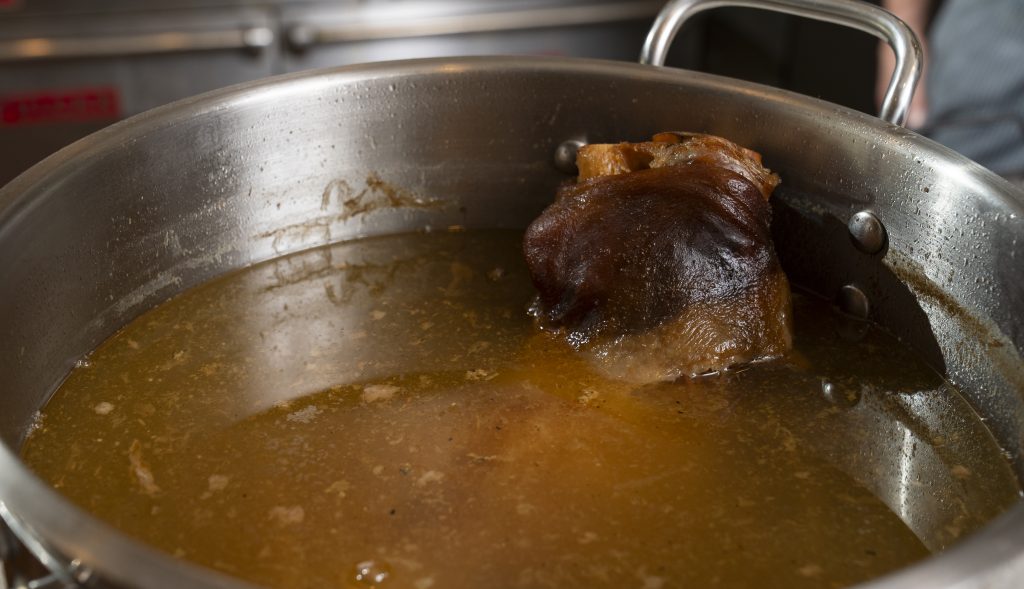
Once you have soaked the ham, discard the soaking water. Then, most of the ham needs to be covered by water in your large stock pot or canning pot. If the hock sticks out a little, it will be okay; it will cook during the next process. Bring the water to just below a simmer, and cook for 15 to 20 minutes per pound of ham. Get the thickest part of the ham to 145 degrees.
Once the ham has come up to temperature, remove it (save the water for stock), and place on a cutting board to cool for 15 to 20 minutes.
Skin
Once the ham has cooled to the touch, carefully remove the skin and add it back to the pan to make stock or discard it if not needed. Only remove the very outer layer of skin; the fat will render and crisp during the next process. Cut around the base of the hock, just into the skin, and work down the rest of the ham, leaving the skin on the hock to prevent it from drying out.
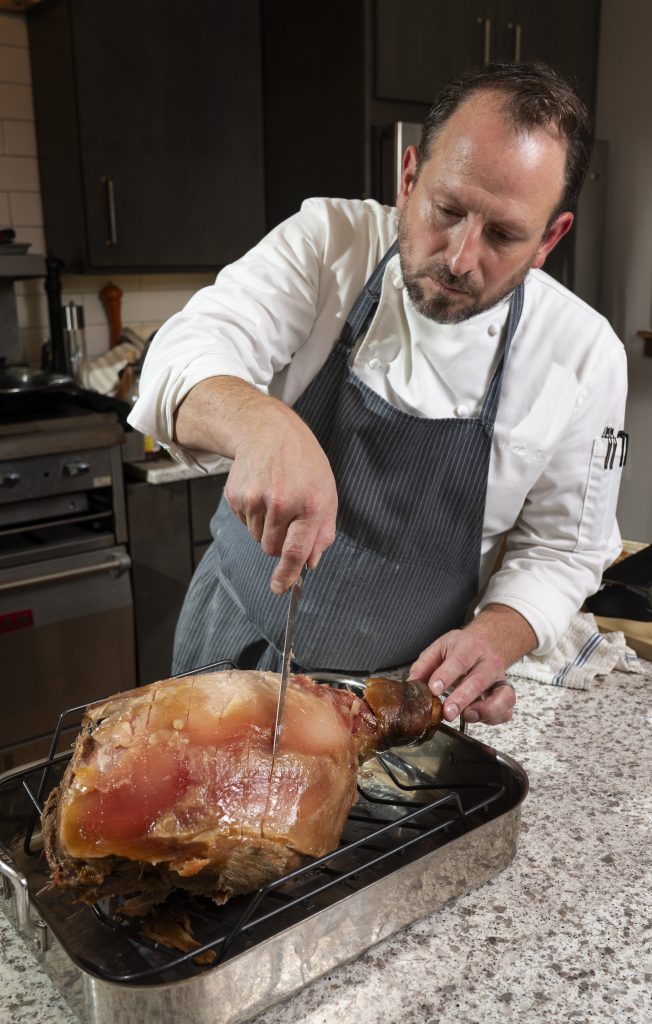
After all of the skin is removed, cut a cross-hatch pattern into the ham. This helps some of the glaze get deeper into the meat and creates a nice presentation when the ham is finished.
Glaze
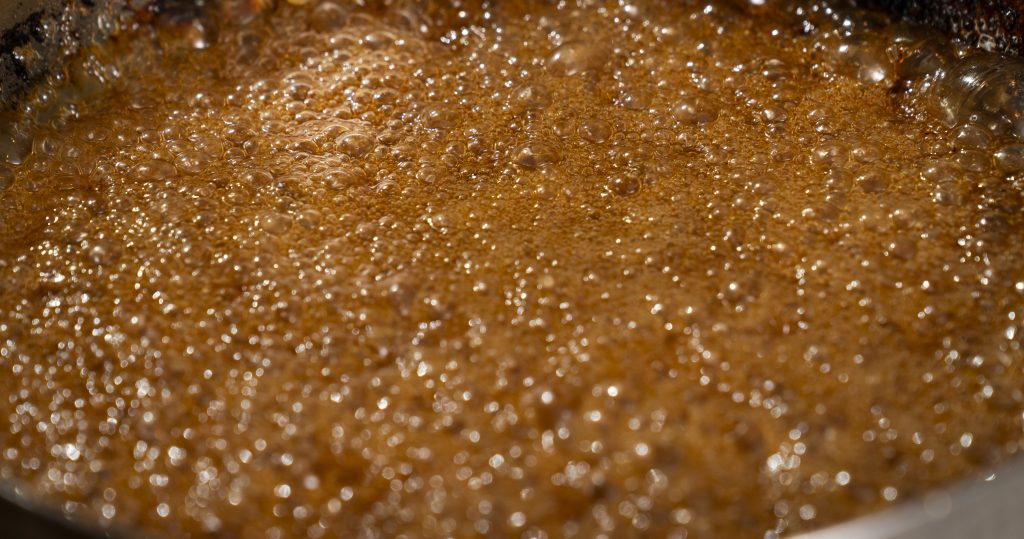
Make the glaze when the ham first starts to simmer in the water, which gives enough time to cool it down and adjust the consistency if needed. A cool glaze will stick to the ham much better than a warm glaze. There are a lot of different options for making the glaze; the one I have to the right is very simple. Feel free to add orange juice, apple juice, preserves or anything else sweet you may have lying around. Simmer the glaze to dissolve all of the sugar and thicken it.
Be careful not to reduce it too much. A hot sugary liquid will seem very fluid, but as it cools down, it will become thick and viscous. If it is too thick, stir in some hot ham liquid. If it is too thin, simmer a bit longer.
Bake
Once you have your glaze made and ham on a roasting pan, brush the glaze liberally. Then, place it into a preheated 350-degree oven for 15 to 20 minutes, rotating a little over halfway through and brushing with more glaze (some will drip off and start to caramelize on the bottom, not much to do about that).
When the glaze has bubbled and browned, and has a few dark brown spots, remove the ham and let it rest for 15 to 20 minutes.
Slice
From the side, cut in until you hit the center bone, then make a 90-ish degree turn and follow the bone until you get close to the end. Cut down from the side to connect the cuts and remove that section of the ham. Flip the ham and repeat on the other side. Those two chunks will be the majority of the ham and will be very easy to slice. You can carve on the other section, but they won’t have quite as much glaze as the other cuts.
Once sliced, I like to put them on some type of oven-safe dish so I can flash them in the oven just before serving.

Serve
I try to have the ham cooked and sliced about an hour before we need it, which allows me to use the oven to finish other dishes, then warm the ham up before we dig in.
Brown Sugar Mustard Glaze
Ingredients
- 1 cup brown sugar
- 1/4 cup Dijon or country mustard
- 1 cup ham liquid from simmering with some fat
Instructions
- Simmer the brown sugar, mustard and ham liquid for about 5 to 10 minutes until it thickens slightly.
- Take a small container of cold water and drop a spoonful of the glaze into it. Let it cool for a few seconds to congeal together at the bottom, then try to pick it up with your fingers. The sweet spot is where you can just barely pinch and pick up the glaze in the water. This is what the rest of the liquid will be like once cooled.
- Now you have a perfect, salty-sweet country ham. All that’s left to do is enjoy. Happy holidays!