
My child’s vision keeps getting worse — can an optometrist do more than update their glasses?
Yes. Optometrists do far more than prescribe glasses; we’re primary eye-care doctors who manage everything from routine vision changes to complex medical eye conditions. For children, one of the most important advances is myopia control, which helps slow or even stop nearsightedness from worsening.
At Andrew Stone Optometry, we offer proven options like Orthokeratology, MiSight® lenses, Atropine therapy and advanced spectacle designs to protect long-term vision and reduce the risk of eye disease later in life. Every recommendation we make is guided by evidence, clinical testing and a deep understanding of each patient’s unique needs.
Optometrists are trained medical professionals who look beyond glasses and contacts, evaluating how the eyes interact with the whole body. At Andrew Stone Optometry, we’re proud to be that trusted, local resource Columbia families turn to for lifelong vision and eye health.
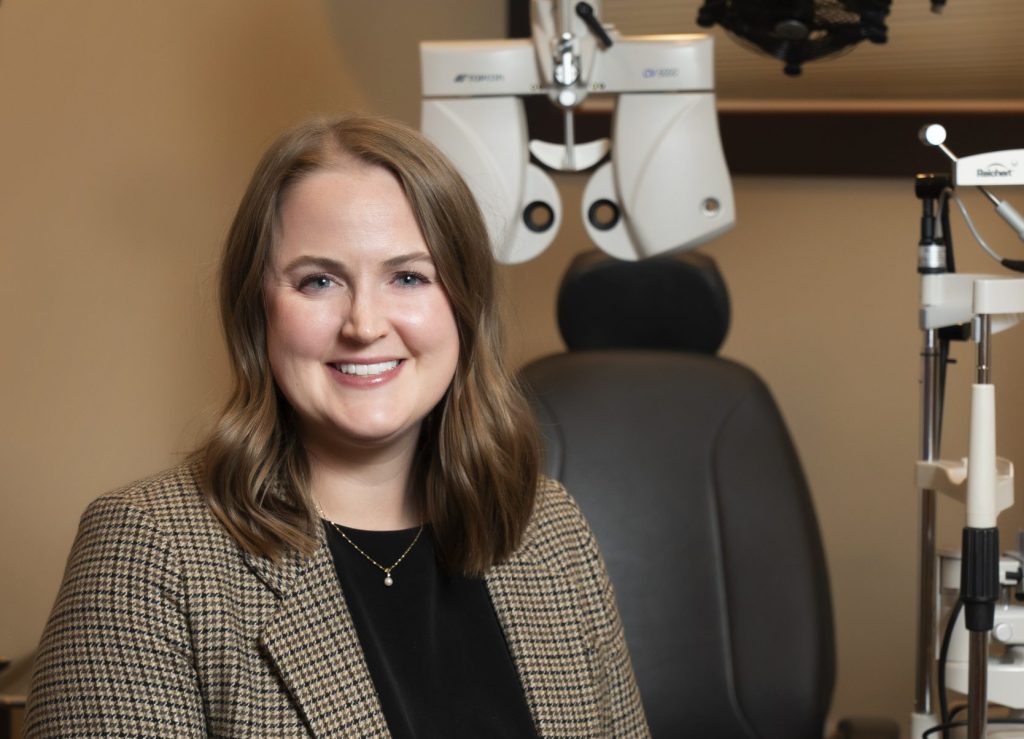
Dr. Sarah Wolf
Optometrist
Eye health is more than clear vision — it’s medical care that deserves a personal approach. “One-size-fits-all advice doesn’t work,” says Dr. Sarah Wolf of Andrew Stone Optometry. “Online posts can oversimplify or even misrepresent conditions like myopia, dry eye or glaucoma, and that can delay proper care.”
Dr. Wolf earned her Doctor of Optometry degree from the Southern College of Optometry in 2018 and began her career in Kansas City, where she designed and implemented a myopia management program centered on atropine therapy and MiSight® lenses.
After joining Andrew Stone Optometry, she expanded her expertise to include Orthokeratology, integrating it into a comprehensive, evidence-based approach for Columbia families.
“When you visit us, you’ll feel that passion immediately,” she says. “We combine advanced medical technology with genuine, personal care — whether you’re here for preventive exams, urgent issues like pink eye or abrasions, or long-term disease management such as glaucoma or macular degeneration.”